
Beat the Bots, Reach the Humans

75% of resumes are rejected by ATS before a recruiter sees them. Our AI fixes formatting, keywords, and structure so your resume reaches human hands.
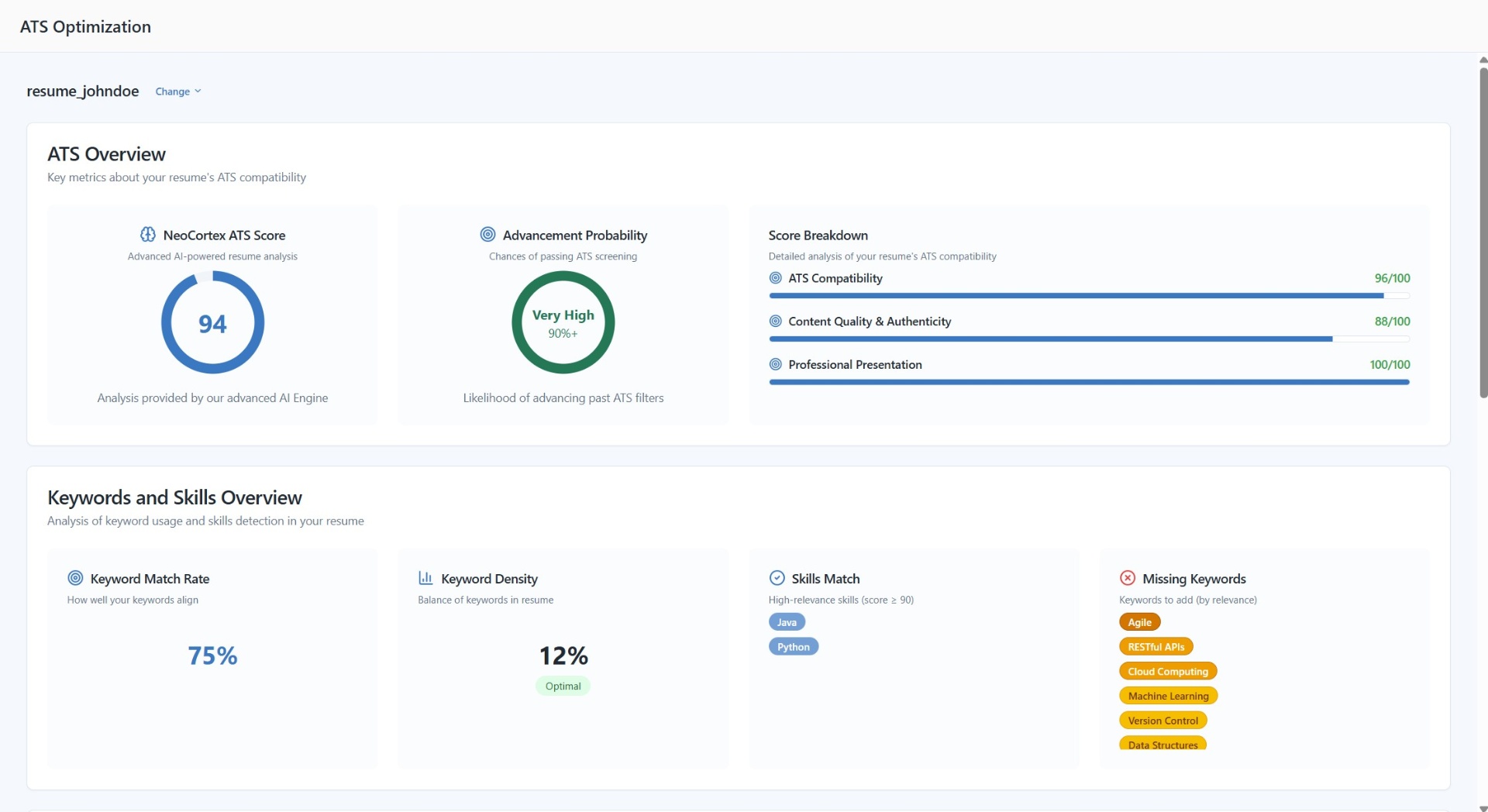
ATS Optimization Dashboard — AI-powered resume scoring, keyword analysis, and formatting compliance results
75%

of resumes rejected by ATS

99%

of Fortune 500 use ATS

3x

more interviews after optimization

How It Works

1

Upload Resume

Upload your current resume in PDF or Word format.

2

ATS Scan

We simulate how major ATS systems read and parse your resume.

3

AI Optimization

Our AI applies targeted improvements while maintaining your voice.

4

Download

Get your ATS-optimized resume ready for applications.

Every Layer of Your Resume, Optimized

ATS rejection happens for specific, fixable reasons. We find them all.

Formatting Compliance

ATS-friendly section headers, fonts, and layouts that parsers read correctly.

Keyword Optimization

Identify missing industry keywords and naturally incorporate them throughout your resume.

One-Click Optimization

Apply AI-powered improvements instantly — rewritten bullet points for maximum ATS compatibility.

Parsing Validation

See exactly how ATS reads your resume and catch information that might be missed.

Content Enhancement

Stronger action verbs, quantified achievements, and optimized skills sections.

Compliance Check

Validated date formats, contact information, and section headers against ATS standards.

What Is ATS and Why Does It Matter?

An Applicant Tracking System (ATS) is software employers use to manage hiring. It scans, parses, and ranks resumes based on keywords, formatting, and relevance to the job posting. Over 99% of Fortune 500 companies use ATS. When you submit a resume online, ATS processes it before any human sees it. The system extracts your information, matches it against job requirements, and assigns a ranking. Resumes scoring below the threshold are automatically rejected — often without a recruiter ever reviewing them.

How ATS Resume Optimization Works

ATS optimization adjusts your resume's content and formatting for maximum parsing compatibility. This includes using standard section headers ("Work Experience" instead of "My Career Journey"), incorporating relevant keywords naturally, avoiding tables or graphics, and ensuring consistent date formatting. Our AI analyzes your resume against the same criteria ATS systems use, then applies targeted improvements. Check your resume score before and after to see the difference. The result: a resume that keeps your professional voice while dramatically improving your chances of passing automated screening.

Top ATS Formatting Mistakes

Common mistakes: using headers and footers for important information (ATS often ignores these), embedding text in images, using non-standard fonts, multi-column layouts, and relying on tables for formatting. Other frequent issues include creative section titles ATS can't recognize, inconsistent date formats, and overly designed templates that prioritize appearance over parseability. Our tool catches all of these and provides specific fixes.

Keywords: The Foundation of ATS Optimization

Keywords are the single most important factor in ATS ranking. The system matches your resume against keywords in the job description. Missing key terms — even if you have the skills — results in a low ranking. Effective keyword optimization means identifying important terms from job descriptions and incorporating them naturally. This includes job titles, technical skills, certifications, tools, and industry terminology. Our AI identifies what you're missing and shows you where to add it without making your resume feel keyword-stuffed.

Frequently Asked Questions

Stop Getting Rejected by Bots

Your qualifications deserve to be seen. Make sure ATS isn't the reason they aren't.

Optimize Now